
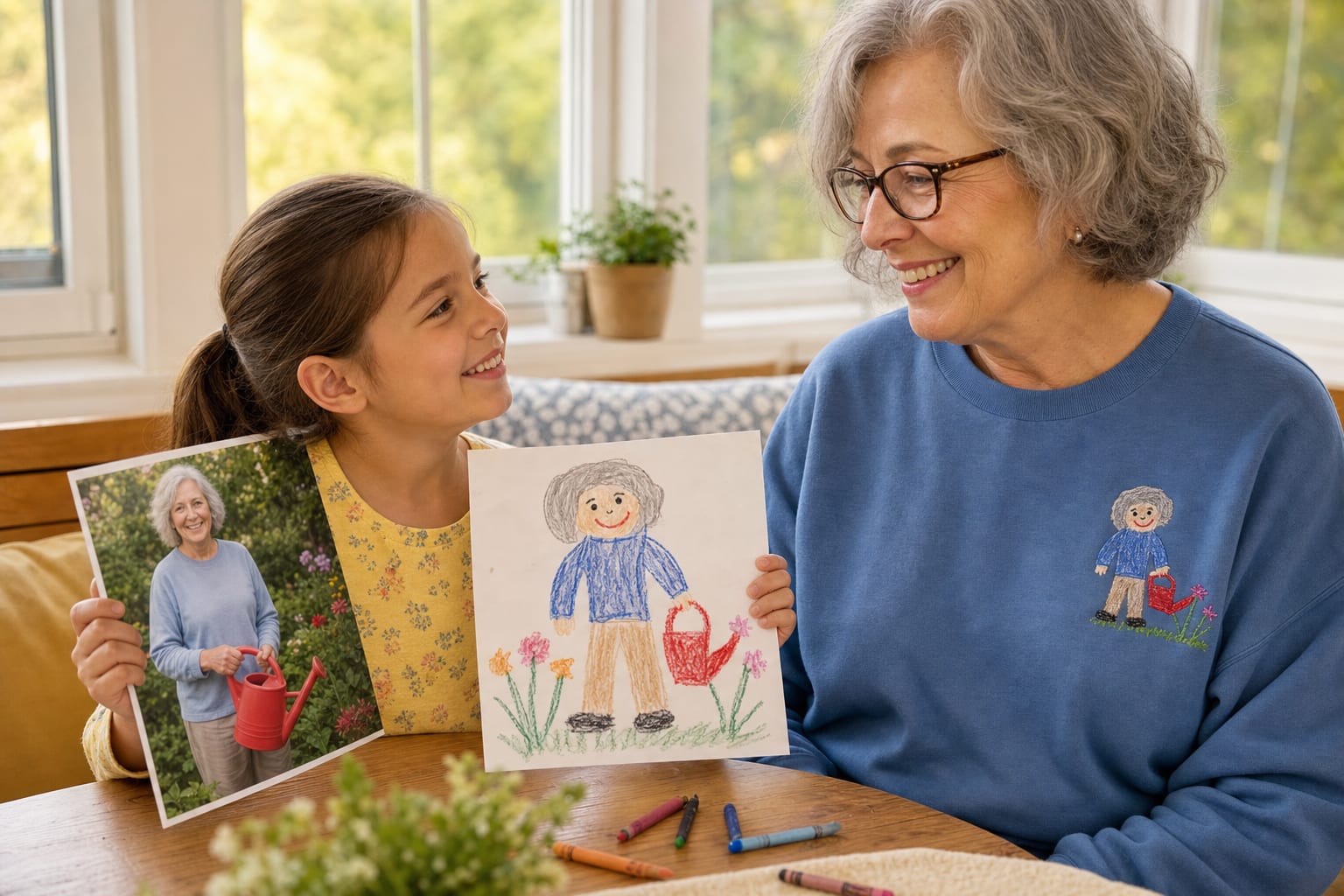
Children draw the people, pets, places, and imaginary characters that matter to them. A picture that begins on ordinary paper can become one of the most personal gifts a parent or grandparent owns when those original lines are stitched onto something they can wear.
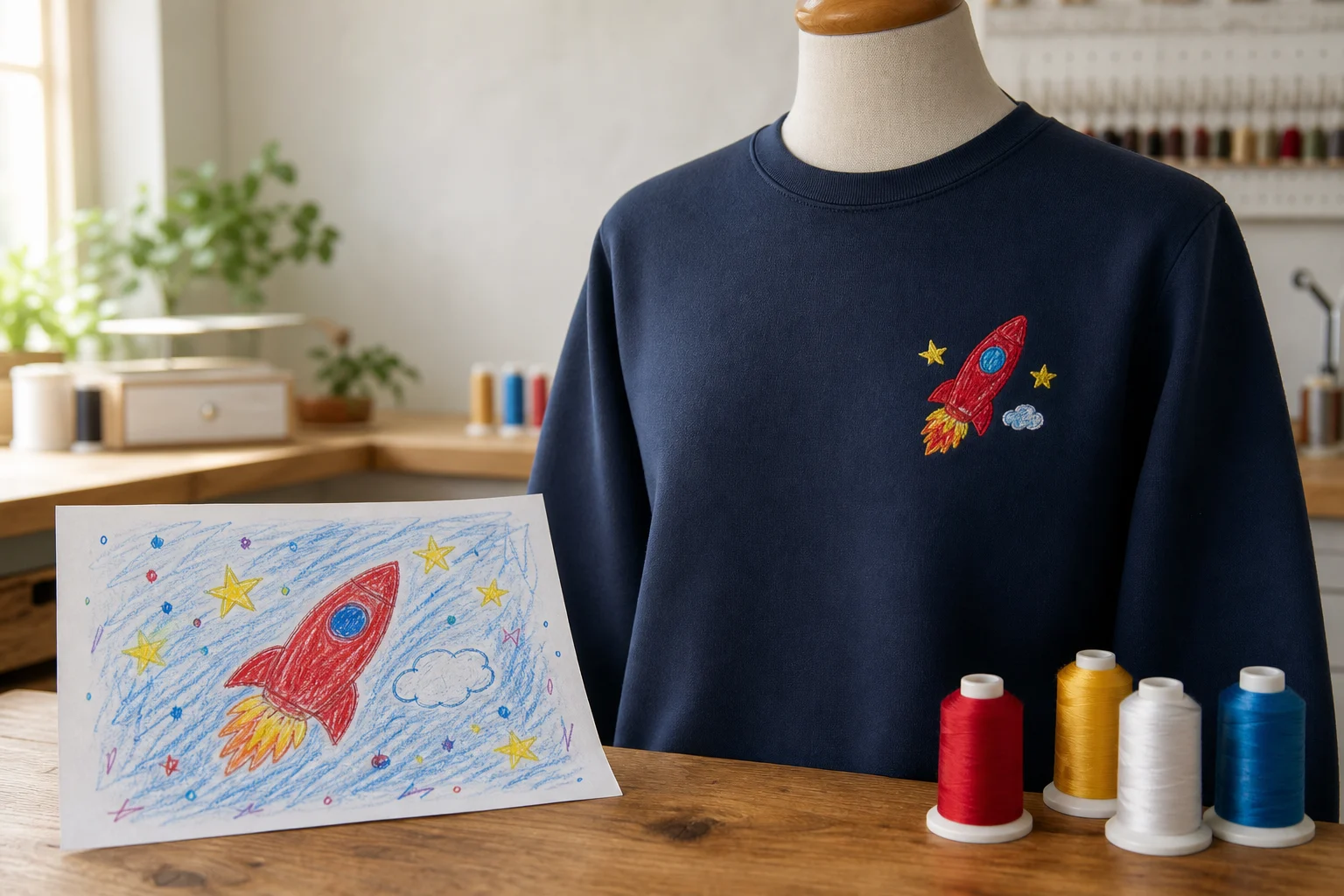
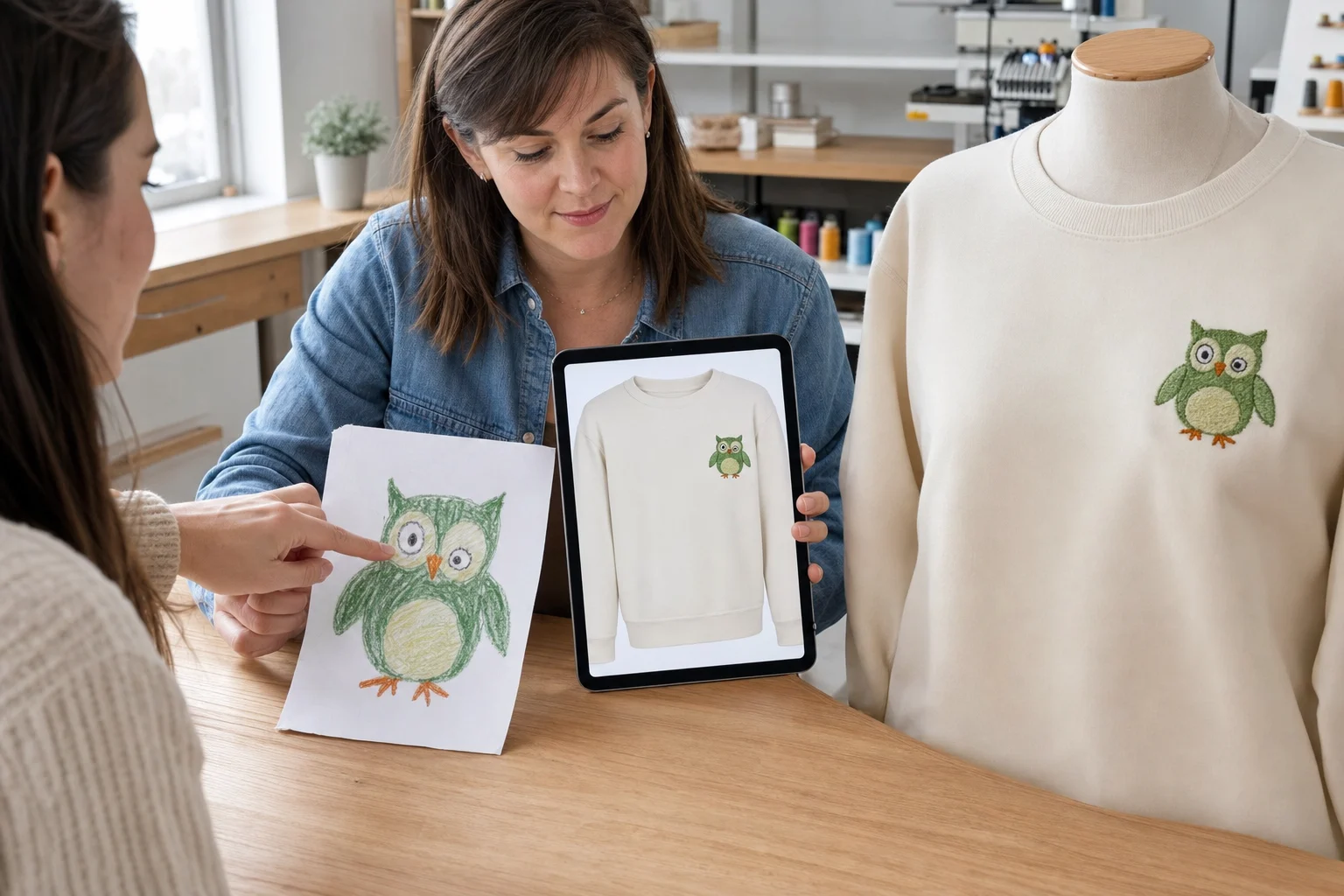
Turning kids’ drawings into embroidery is not about making the artwork look more professional. The goal is to preserve the proportions, colors, and charming imperfections that make the picture recognizable as your child’s work. This guide explains how to choose the right drawing, prepare a clear image, select the garment, and review the design before ordering a custom sweatshirt with your child’s artwork.
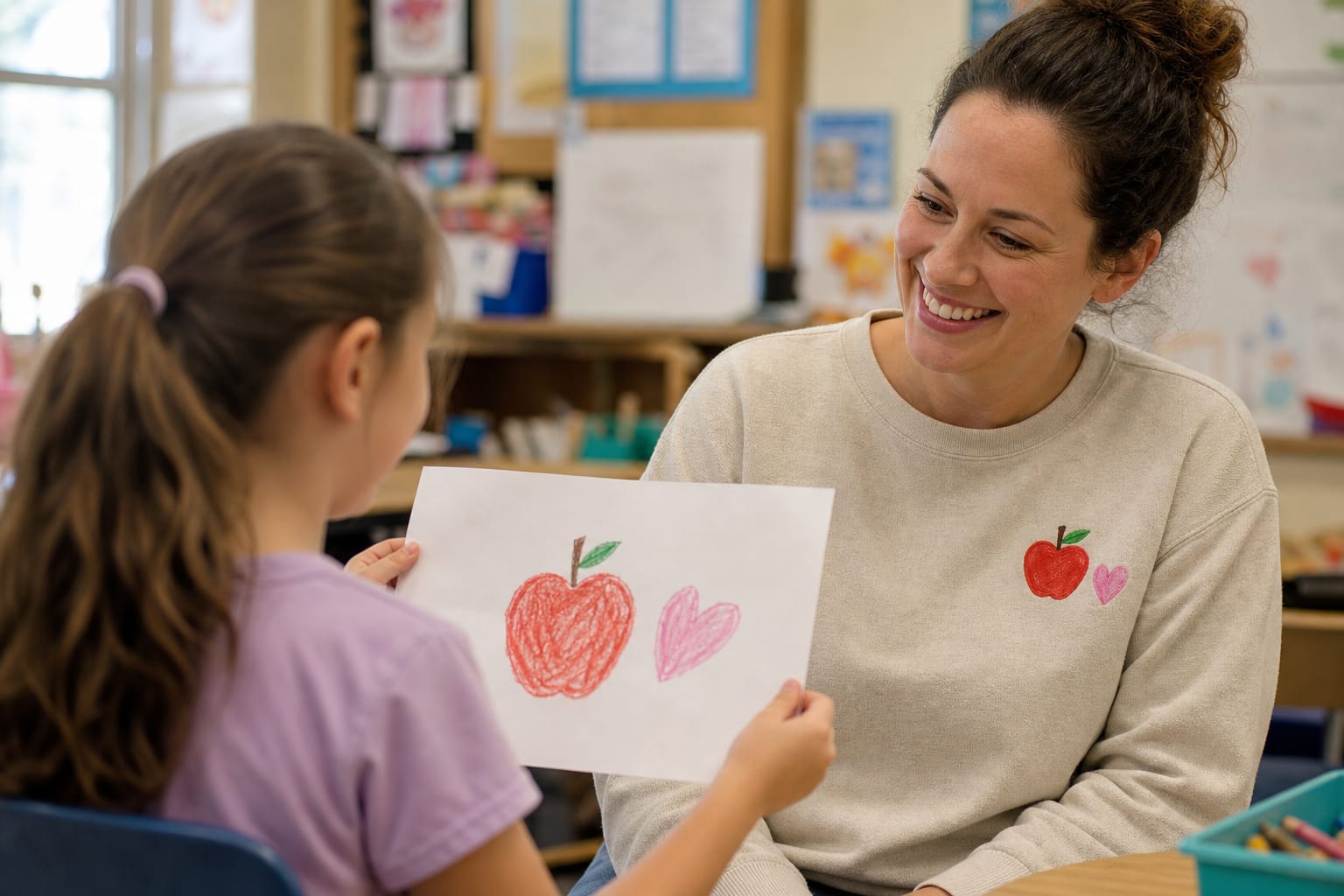
1. Choose a Drawing With One Clear Main Subject
Start with artwork that has an obvious focal point. A drawing of the family, a beloved pet, a favorite car, a rainbow, a dinosaur, or an imaginary creature usually translates more clearly than a page filled with many unrelated objects.
Simple does not mean boring. Large shapes, bold outlines, and a limited number of colors often produce especially recognizable embroidery. If the drawing includes several family members, make sure each figure is large enough to see. Very small faces, crowded backgrounds, and dozens of tiny decorations may need to be simplified or omitted.
The best choice is often the drawing that captures a specific stage of childhood: the first recognizable family portrait, the pet with five legs, or the superhero your child invented and drew every week.
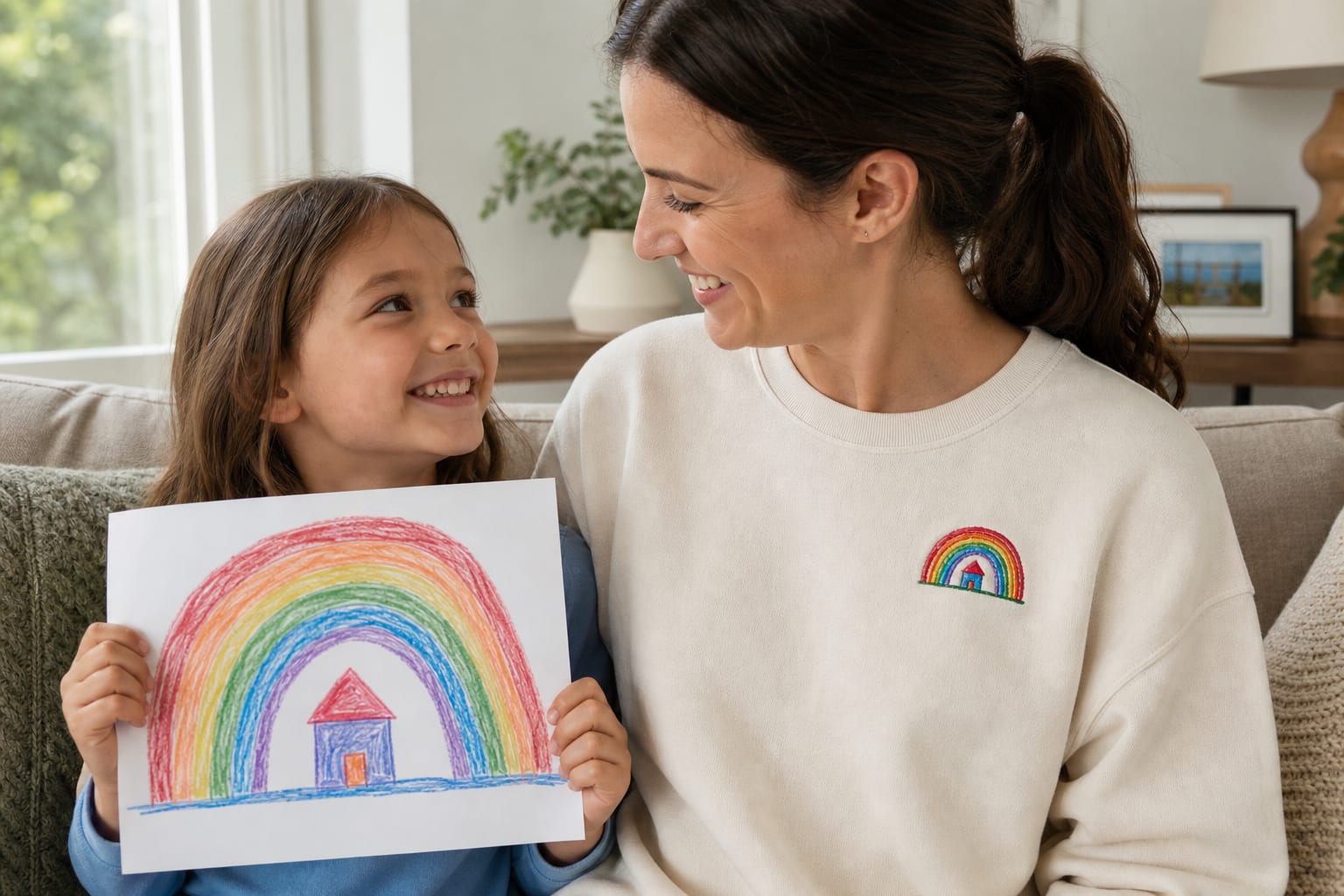
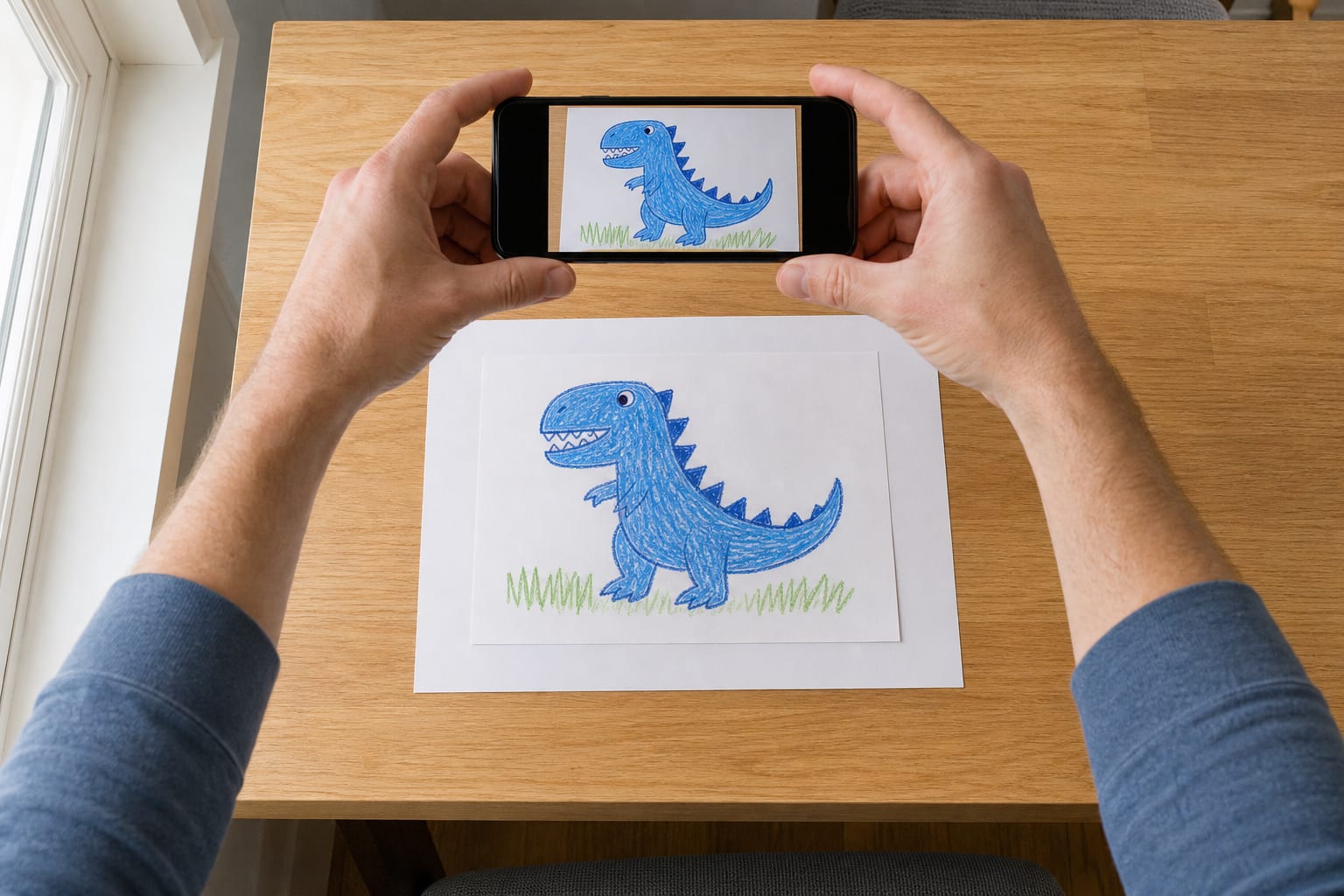
2. Photograph or Scan the Artwork Carefully
A clear digital copy gives the designer the best chance of preserving the original. Scanning works well for flat paper, but a modern smartphone can also produce an excellent file. Place the drawing on a clean surface beside a bright window, keep the camera parallel to the page, and make sure all four corners are visible.
Avoid direct flash, strong shadows, wrinkled paper, and photos taken at an angle. Do not cover part of the drawing with a hand or frame. If the paper is thin, place a plain white sheet behind it so marks from the other side do not show through.
Upload the original photo or scan rather than a screenshot, messaging-app copy, or heavily compressed social media image. Higher resolution helps the designer distinguish a deliberate line from a crease, smudge, or shadow.
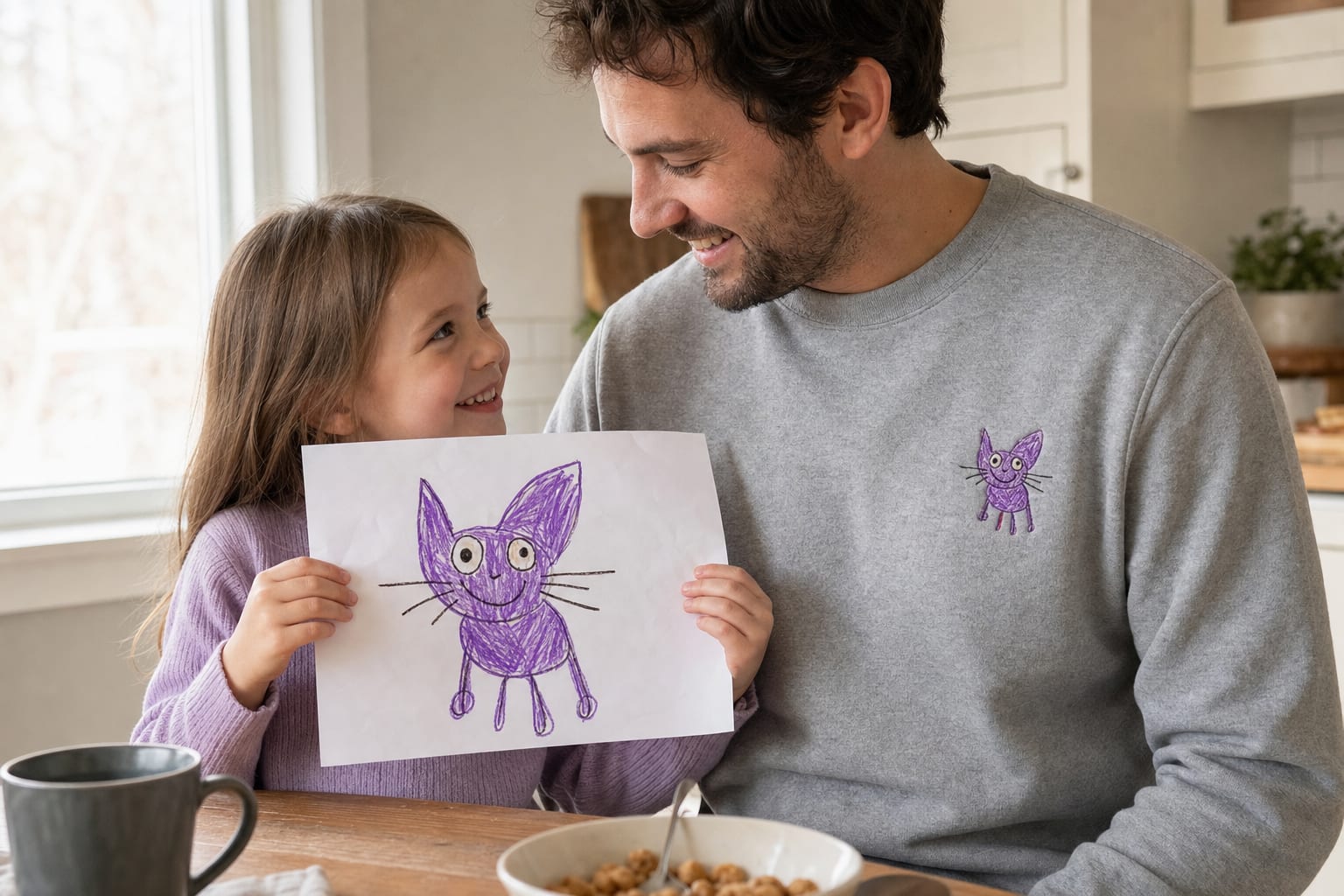
3. Preserve the Childlike Lines and Imperfections
Uneven circles, oversized hands, wandering lines, and surprising color choices are often the most meaningful parts of children’s art. Unless a stray mark clearly came from dirt or damage, ask the designer not to redraw the picture into a polished adult illustration.
It is reasonable to remove the paper background, straighten the image, close a small gap that cannot be stitched, or slightly separate two overlapping lines. Those production adjustments should support the original drawing rather than replace its personality.
When ordering gifts made from children’s drawings, tell the designer which details must remain unchanged. You might care most about a crooked smile, the way your child wrote a name, or the unusual color chosen for the family dog.
4. Let the Design Be Simplified for Thread
Embroidery uses thread, not ink or pixels. Extremely thin pencil marks, watercolor washes, tiny dots, and tightly packed scribbles cannot always be reproduced exactly. A good embroidery-ready design groups similar colors, strengthens essential outlines, and removes details that would become muddy at the final size.
Ask for simplification that keeps the subject recognizable. A child’s drawing of a house may only need the roof, door, windows, and family figures. A colorful monster may need its outline, eyes, teeth, and three or four main colors rather than every crayon stroke.
Small left-chest embroidery works best when the composition remains compact and readable. If the original artwork is very detailed, consider selecting one character or object from the page instead of shrinking the entire scene.
You May Also Like

Custom Kids Drawing Embroidered T-Shirt or Sweatshirt - Custom Teacher Appreciation Gift

Custom Kids Drawing Embroidered T-Shirt - Custom Teacher Thank You Gift

Custom Fishing Dad Cartoon Portrait Embroidered Hoodie - Custom Father's Day Fishing Gift
5. Choose Garment and Thread Colors With Enough Contrast
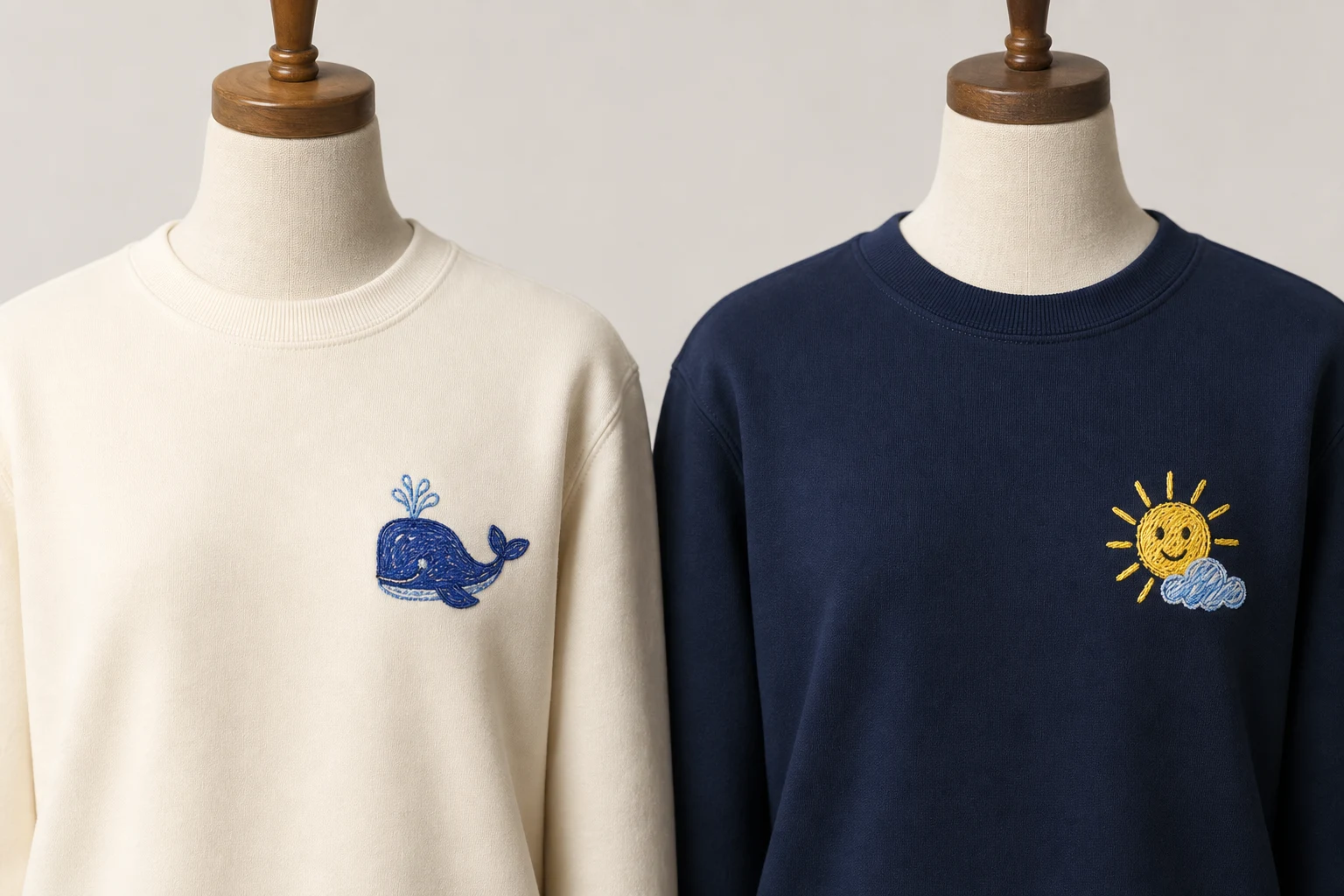
The sweatshirt or T-shirt becomes the background of the artwork. Yellow, pale pink, or white thread may disappear on cream fabric, while navy, brown, and black details can blend into a dark garment. Strong contrast helps a small embroidered drawing remain visible from a natural viewing distance.
Neutral garments such as cream, gray, navy, forest green, and black are easy to wear, but the best choice depends on the artwork. Bright multicolor drawings often stand out on cream or light gray. Mostly pale drawings may look clearer on navy. Dark line drawings can work beautifully on oatmeal or dusty colors.
You do not have to reproduce every crayon color exactly. Ask the designer to match the overall feeling while choosing thread shades that remain distinct from one another and from the garment.
6. Add Personalization Without Overcrowding the Artwork
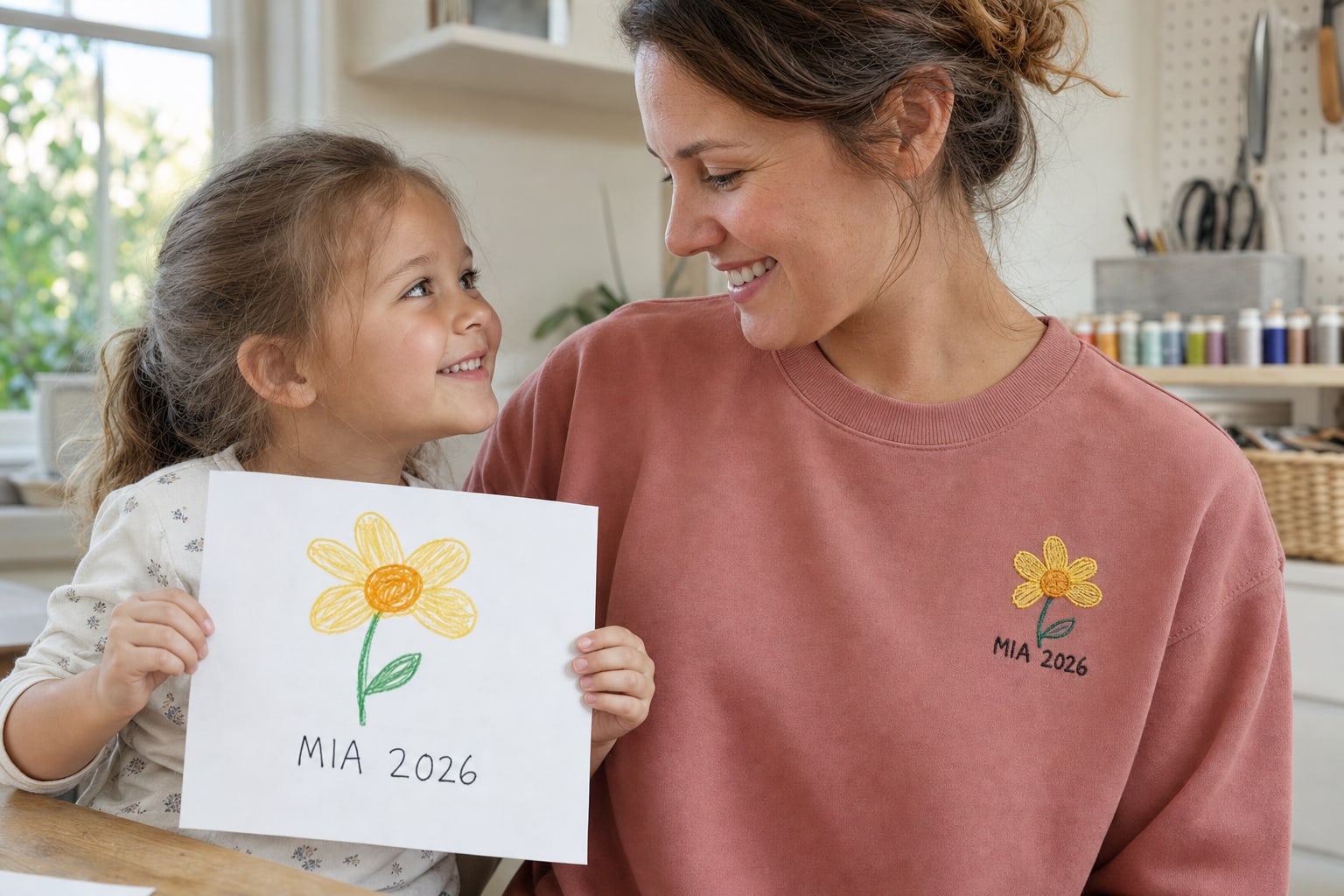
A child’s name, age, date, or short handwritten phrase can add context to a wearable keepsake. Keep additional information brief so the drawing remains the focus. One name and a year are often enough to preserve the memory.
If you want to include real handwriting, provide a separate, well-lit sample written with a dark pen or marker. Do not expect very small letters to remain readable in thread. The designer may need to enlarge the writing or simplify closely spaced strokes.
All elements should form one balanced left-chest design rather than appearing as several unrelated decorations. When the drawing already includes handwritten words, consider using those original marks instead of adding a second font.
7. Match the Wearable Gift to the Recipient and Occasion
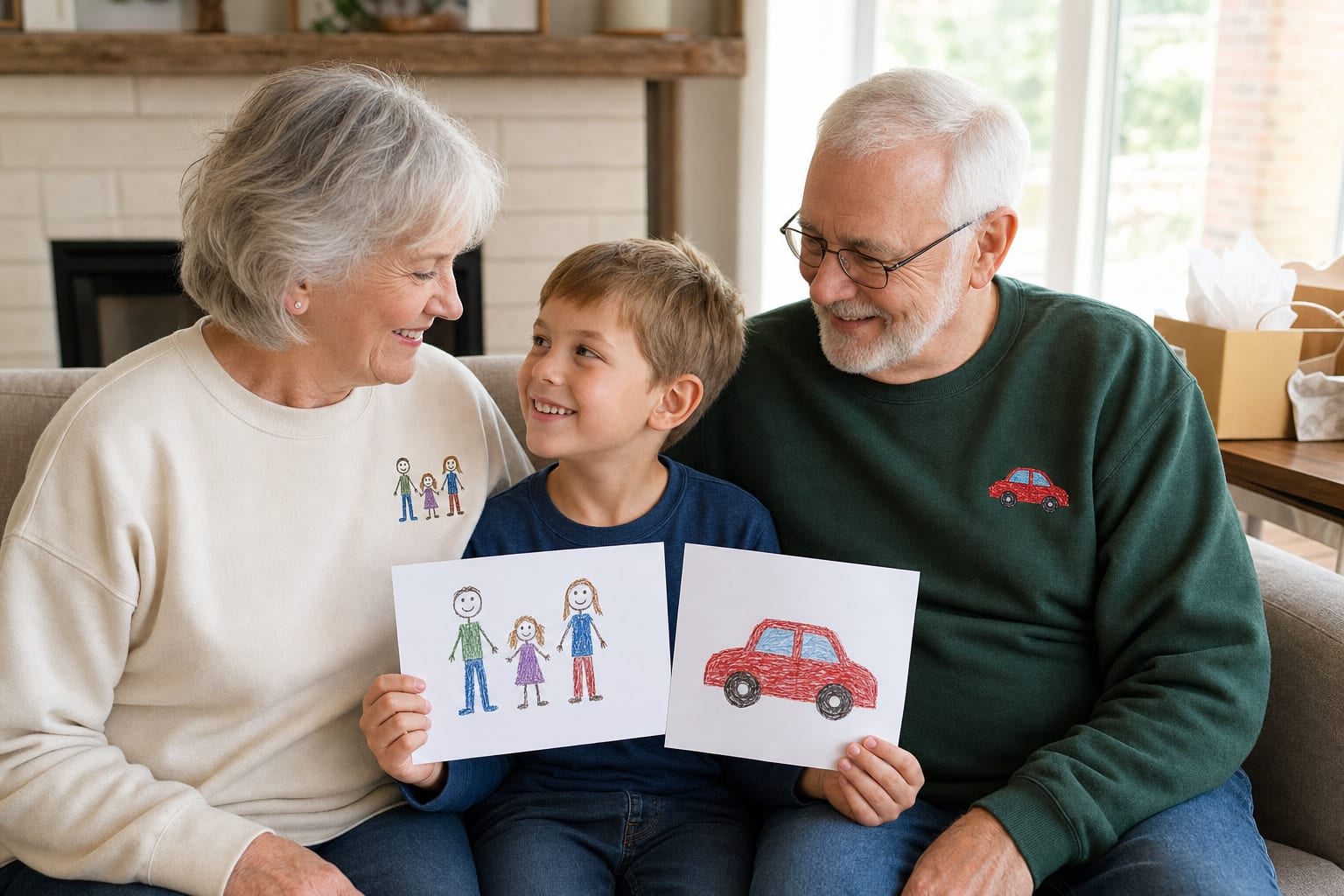
Personalized gifts from kids’ art work for more occasions than Mother’s Day and Father’s Day. A parent might wear a first family portrait, while a grandparent may treasure a drawing of the grandchildren holding hands. A teacher could receive an embroidered class mascot created by a student, and siblings can wear coordinating versions of the same imaginary character.
Useful gift occasions include:
- Mother’s Day or Father’s Day
- Grandparents Day
- A parent’s or grandparent’s birthday
- Christmas and other family holidays
- A child’s first day of school or graduation
- Adoption anniversaries and family milestones
- Memorial gifts featuring a child’s drawing of a loved one or pet
Choose a sweatshirt for cooler seasons and long-term comfort, or a T-shirt for warm weather and frequent casual wear. The most successful gift fits the recipient’s real wardrobe rather than existing only as a display item.
8. Review the Design Proof Before Production
Compare the proof with the original artwork before stitching begins. Check the number and position of people, pets, limbs, facial features, and important objects. Confirm that key imperfections remain, the colors feel faithful, and no meaningful line has been removed by mistake.
Also verify the garment style, size, color, thread palette, left-chest placement, embroidery dimensions, and any name or date. View the proof at approximately the final size. A line that looks thick on a large screen may be appropriate when the design is only a few inches wide.
Request clear, focused edits instead of asking for a general improvement. For example, explain that the child intentionally gave the dog one blue ear, or that a small figure represents a younger sibling and must remain. Approval is easier when the designer understands the story behind the artwork.
Ideas for Turning Kids’ Drawings Into Wearable Gifts
If you are unsure which page from the art box to use, consider:
- A first drawing of the whole family
- A portrait of Mom, Dad, Grandma, or Grandpa
- A child’s drawing of the family pet
- A favorite imaginary animal or superhero
- A drawing of the family home
- A picture made for a birthday or holiday
- A handwritten message paired with one small illustration
- A simple flower, heart, rainbow, car, rocket, or dinosaur
- Matching sibling drawings placed on separate garments
- A series of annual drawings turned into a growing keepsake collection
The value of an embroidered drawing does not come from perfect anatomy or polished technique. It comes from recognizing the exact way a child saw the world at a particular age. By preserving the original character of the artwork and adapting only what thread requires, you can turn a sheet of paper into a wearable gift that feels personal now and becomes more meaningful over time.
FAQs About Embroidering Children’s Drawings
Can crayon, pencil, or watercolor artwork be embroidered?
Yes, although the design may need different levels of simplification. Bold crayon and marker lines translate most directly. Light pencil should be photographed or scanned with strong contrast, while watercolor areas may be converted into several solid thread colors.
Can a drawing with several people be used?
Yes, if each person is large and distinguishable. For a small left-chest design, a simplified family outline or a selection of the main figures may be clearer than an entire crowded page.
Should spelling mistakes be corrected?
Usually not automatically. Childlike spelling can be part of the memory. Tell the designer whether to preserve the original writing or correct a specific word.
Can two different drawings be combined?
Often, yes. The designer may place one main subject beside a small element from another page, but the final composition should remain simple enough for the embroidery size.
What garment works best for children’s artwork?
Crewneck sweatshirts provide a stable surface and are easy to wear as keepsakes. T-shirts are a good option for warm weather. In either case, choose a fabric and color that give the thread design enough contrast.